
Catherine Lippe
Catherine is a paediatric nutritionist with over 10 years’ experience. She offers tailored advice on child nutrition including: weaning, fussy eating, and nutrition for pregnancy and breastfeeding.


We have simple ideas and expert advice to help your kids eat well at school, without the daily battle!
Packing lunchboxes can feel like a lot: not enough time, not enough ideas, and worries about what actually gets eaten. But small, realistic changes can make a big difference to your child’s energy, focus and confidence at school.
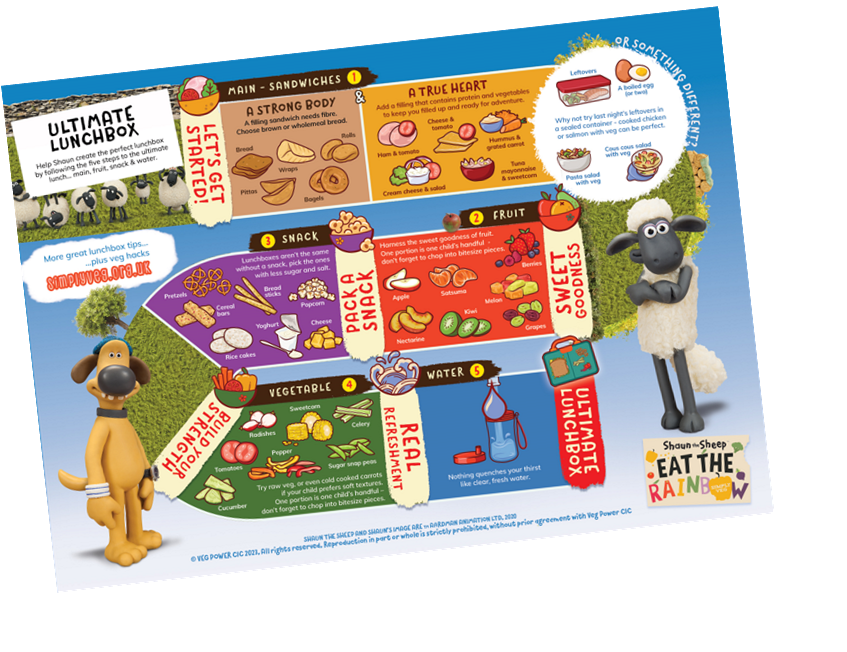
This page brings together expert lunchbox advice and practical inspiration from Registered Nutritionist, Catherine Lippe to help you build lunches your kids will actually eat using everyday foods, simple swaps and no pressure to be perfect. Plus, give our Shaun the Sheep lunchbox planner a go – it’s perfect for getting kids involved (and invested) in lunchboxes!

Registered nutritionist Catherine Lippe explains how to build a balanced lunchbox with foods kids can enjoy, using everyday ingredients.
A healthy lunchbox doesn’t have to be perfect. Learn what really matters most, and what is less important.

From picky eating to half-eaten lunches, Catherine shares practical, pressure-free ways to tackle helping kids feel confident about food at school.
Less stress, less waste, and lunchboxes that come home empty, for the right reasons!
1
Aim for balance, not perfection.
A healthy lunchbox is all about balance and variety, and includes: carbohydrates for energy (bread, wraps, pasta…), protein to keep kids full (cheese, eggs, tuna, beans, hummus…), fruit and vegetables for vitamins and fibre.
You don’t need fancy recipes or tools, just a little planning and a mix of familiar foods kids already enjoy.

2
Start with what they know
Familiar foods make the best lunchboxes. Sandwiches and wraps are quick, budget-friendly and easy to eat. Fill them with a protein your child likes, plus a little veg such as grated carrot, cucumber or salad leaves.
Leftovers like pasta salad or last night’s dinner can work just as well, just remember a fork or spoon. Cut food into small, child-friendly pieces to make lunchtime easier and more appealing.

3
Build in fruit & veg
Try to include one fruit and one veg each day. Crunchy veg often work best in lunchboxes, think cucumber sticks, pepper slices, sugar snap peas or sweetcorn. Fruit like satsumas, sliced apple, melon or halved grapes are easy wins.
Chop everything into bite-sized pieces and pack in small pots to avoid soggy sandwiches and food waste.

4
Keep it cool, simple & safe
Little practical details make a big difference. Lunchboxes can sit in warm rooms for hours, so add a small ice block if you can. Choose plain yoghurts with no added sugar, and always pack a spoon or napkin to reduce mess.
Check your school’s food policy (most have a strict no nuts rule) and stick to water as the best, tooth-friendly drink.

5
Get kids involved
Kids are more likely to eat what they help choose. Offer limited choices (ie: “carrot or cucumber?”) so they feel in control without overwhelm. Bright colours, variety and even a small surprise (a note or sticker) can make lunch feel exciting.
Talking about food, praising effort and role-modelling healthy eating at home all help build positive habits over time.

Catherine Lippe
Catherine is a paediatric nutritionist with over 10 years’ experience. She offers tailored advice on child nutrition including: weaning, fussy eating, and nutrition for pregnancy and breastfeeding.
Our thanks to Aardman Animation for their long-term support.
Shaun the Sheep and Shaun’s image are trade marks of Aardman Animations Limited 2026.


Simply Veg
Healthy made simple
Our only goal is to help parents and carers serve up affordable, simple food their families will love. We know that takes more than a few recipes, so we've got all the hacks and advice you'll need. Join now. It's 100% free and 100% simple.


For exclusive new content